Table of Contents
With urban areas continually expanding, there is a growing need for innovative and sustainable methods of flood prevention. One solution that has been gaining in popularity is the reinforced grass driveway. By combining functionality with environmental benefits, reinforced grass driveways are not only aesthetically pleasing but also an effective means of managing stormwater — and a practical alternative to traditional asphalt and concrete.
Understanding the Problem: The Impact of Flooding
Flooding can significantly impact both properties and communities, causing extensive property damage, disrupting daily life, and necessitating costly repairs. In especially severe cases, flooding may also compromise the structural integrity of buildings, resulting in long-term consequences at both the economic and social levels.
Excessive water buildup from snowmelt and spring rains compounds these issues. One of the most significant contributing factors is the proliferation of impervious surfaces such as concrete and asphalt. By preventing the absorption of water into the ground, these surfaces lead to increased runoff. In many urban areas, drainage systems are not adequately sized for the volume of water they must handle during heavy rainfall — making innovative permeable solutions more important than ever.
What Are Reinforced Grass Driveways?
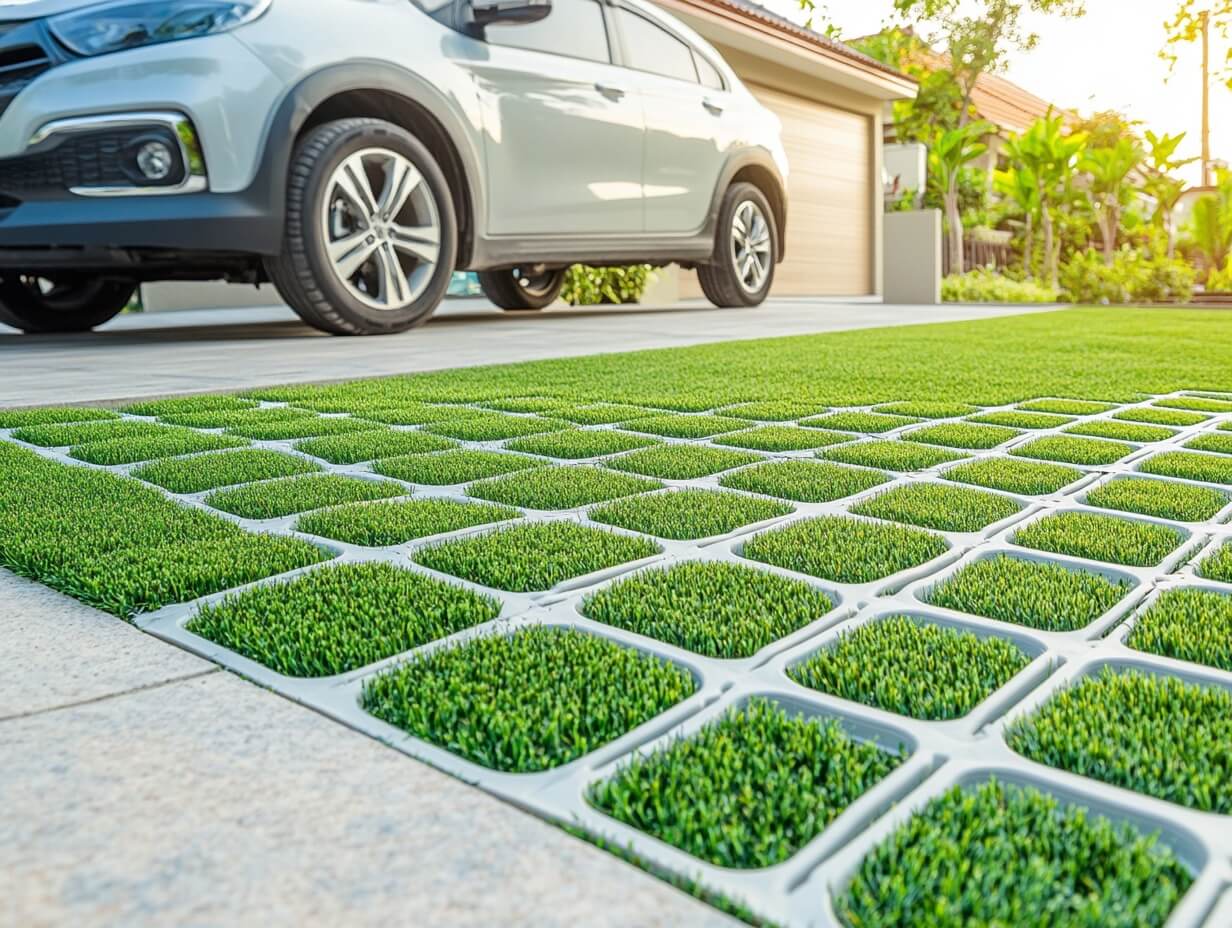
Reinforced grass driveways consist of a structured grid system, typically made from concrete or durable plastic, laid over a compacted base and filled with grass seed and soil. This allows grass to grow while providing structural support capable of bearing the weight of a vehicle — giving the appearance of a traditional lawn with the function of a driveway.
The reinforced grid integrates with grass to create a permeable surface that allows water to pass naturally into the ground. This significantly reduces the volume of stormwater that reaches municipal drainage systems, alleviating strain on urban infrastructure. Unlike asphalt and concrete, reinforced grass driveways also help to counter the urban heat island effect and require fewer raw materials to produce — making them a genuinely sustainable option.
The Benefits of Reinforced Grass Driveways
Improved Drainage and Flood Prevention
The primary advantage of a reinforced grass driveway is the significant improvement to water drainage on your property. The driveway’s permeable nature allows rainwater to permeate the ground rather than pooling on the surface or flooding into stormwater systems. This makes reinforced grass driveways a practical, flood-resistant choice — particularly in flood-prone regions or properties that regularly experience standing water.
Eco-Friendly and Sustainable Landscaping
Water absorbing into the ground not only reduces the probability of flooding but also contributes to groundwater recharge, which is essential for maintaining healthy aquifers. Pollutants are filtered from runoff before reaching local waterways, improving overall water quality. Reinforced grass driveways also help to lower surface temperatures, promote oxygen production, and assist in trapping and storing carbon dioxide — benefits that traditional paving surfaces simply cannot offer.
Aesthetic Appeal
Unlike traditional asphalt or concrete driveways, reinforced grass driveways blend seamlessly into the surrounding landscape, enhancing the neighbourhood environment. They provide a natural aesthetic that many homeowners find more visually appealing than conventional hardscaping — all while maintaining a functional surface for vehicles.
Durability and Longevity
While it may appear that a grass driveway would be vulnerable to damage from parked vehicles, the opposite is true. Reinforced grass driveways are remarkably durable, capable of withstanding heavy traffic and extreme weather conditions. With proper maintenance, they offer a long lifespan and minimal environmental impact — and are typically more affordable than concrete and asphalt options when long-term maintenance costs and environmental benefits are factored in.
Installing a Reinforced Grass Driveway
Before initiating a grass driveway installation, several factors should be considered, including soil composition, slope, and existing drainage. Choosing the right type of reinforcement grid provides greater durability, while a level surface with proper grading allows for more effective water absorption.
Step-by-Step Installation Guide
- Prepare the Base: Clear any existing material from the installation site and compact the subsoil.
- Install a Gravel Foundation: A gravel layer improves drainage and prevents waterlogging beneath the grid.
- Place the Reinforcement Grid: Ensure the grid is securely fitted and evenly distributed for proper structural support.
- Fill with Soil and Grass Seed: Once the grid is in place, fill it with soil and seed for even coverage.
- Water and Maintain: Regular watering will encourage healthy grass establishment and a well-established permeable surface.
Timeframe and Cost Factors
Grass driveway installation typically takes one to two weeks, depending on weather conditions and grass establishment. Costs will vary based on property size and grid material, though reinforced grass driveways are generally more affordable than concrete and asphalt alternatives when long-term maintenance and environmental benefits are taken into account.
Maintenance Tips for Long-Term Performance
Although reinforced grass driveways are durable, they do benefit from periodic care:
- Watering and Grass Care: Proper hydration is essential for strong grass growth. Increase watering during dry spells, fertilize in spring, and make seasonal adjustments to keep the grass healthy and filtering-ready.
- Weed Control and Grid Stability: Use natural herbicides or manual removal to prevent weed overgrowth. Periodically check for grid displacement to maintain long-term structural integrity.
- Winter Maintenance: Use plastic shovels or snow blowers for snow removal. Sand or calcium magnesium acetate are appropriate alternatives to rock salt, which can damage grass.
Comparing Reinforced Grass Driveways to Other Permeable Solutions
Reinforced grass driveways are not the only permeable alternative to traditional driveways, but they offer a distinct combination of benefits worth comparing:
Permeable Pavers
Although permeable pavers offer structural support, they lack the natural benefits of grass, making them less ideal for homeowners seeking a truly eco-friendly solution. Reinforced grass driveways are also widely considered more visually appealing.
Gravel Driveways
Gravel driveways provide drainage but can scatter over time, requiring frequent replenishment. Reinforced grass driveways offer superior soil retention and a more natural appearance.
Bioswales and Rain Gardens as Complementary Features
To maximize your driveway’s flood-prevention potential, consider pairing it with bioswales and rain gardens. These features help manage runoff for enhanced performance, increasing water absorption in the surrounding landscape and making your entire property more resilient during heavy rainfall.
Conclusion
Reinforced grass driveways offer a compelling, effective solution to the challenge of urban flooding — combining improved drainage with enhanced sustainability, durability, and visual appeal. Whether you’re looking to protect your property from seasonal flooding, reduce your environmental footprint, or simply enhance the look of your outdoor space, a reinforced grass driveway is worth serious consideration.
Looking for a flood-resistant driveway solution? Sod Crew provides expert advice, labour, and equipment for sod installation across the Lower Mainland. Explore our sod installation services, learn about sod site preparation, or contact us today for personalized guidance.
Contact Sod Crew: sales@sodcrew.com | 778-809-0506